 Shelf & Square
Under-sink organizers that fit around pipes
A measuring sequence for choosing a turntable, caddy or pull-out in a rental kitchen.
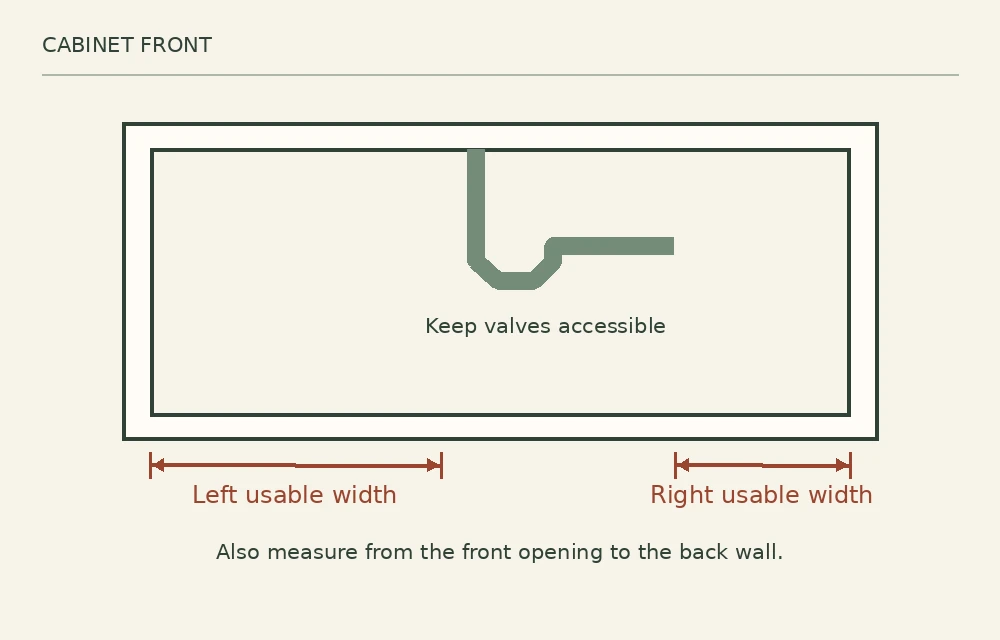
Map the usable floor
Remove the loose items and sketch the cabinet floor from above. Mark the drain trap, supply lines, hinges and any lip at the doorway. Measure both the clear door opening and the usable rectangles to either side of the pipes. A shelf may fit inside a cabinet but still fail to pass between the hinges.
Match the organizer to the opening
A turntable makes sense on an unobstructed square of floor if you regularly reach for several small bottles. A handled caddy works when you take your supplies out of the kitchen. A freestanding pull-out usually needs a straight path and enough empty space in front of the cabinet to extend the tray. Compare the maker's overall width and depth, including its feet and handle, with the smallest opening on your sketch.
Check height with the items inside
Measure from the floor to the lowest pipe over the organizer. Include the height of the tray and the tallest bottle you plan to place on it. Cut a paper footprint, place a representative bottle on it and rehearse the move before ordering. Keep shutoff valves accessible and follow label directions for storing cleaning products.
Try a cardboard footprint
Draw the cabinet opening on the cardboard as well as the organizer footprint. A 12-inch tray cannot pass through an 11-inch opening when it has to stay square to the cabinet. If it can tilt through empty, check whether a loaded tray can still travel in a straight line. Test the planned position with the two bottles you use most. Keep the cabinet hinge and shutoff positions on the same sketch so you can spot conflicts at a glance.