 Shelf & Square
A renter-friendly way to store food container lids
Compare a vertical divider, a drawer tray and a section of shelf you already own.
Pair the lids first
Match each lid to a base and remove the unmatched pieces from the daily storage zone. Keep the sizes you reach for most closest to the opening. Stand a few rectangle lids upright in a box as a trial, then check whether the round lids can fit without sliding across the slots.
Choose a format by lid height
A vertical divider takes up less shelf width when the lids are similar heights and stable on an edge. A drawer tray can be easier for flexible or small lids. A plain basket works when the lids are all similar and you can lift the basket out. Compare how easily you can take one lid without pulling out its neighbors.
Allow room for the lids to move
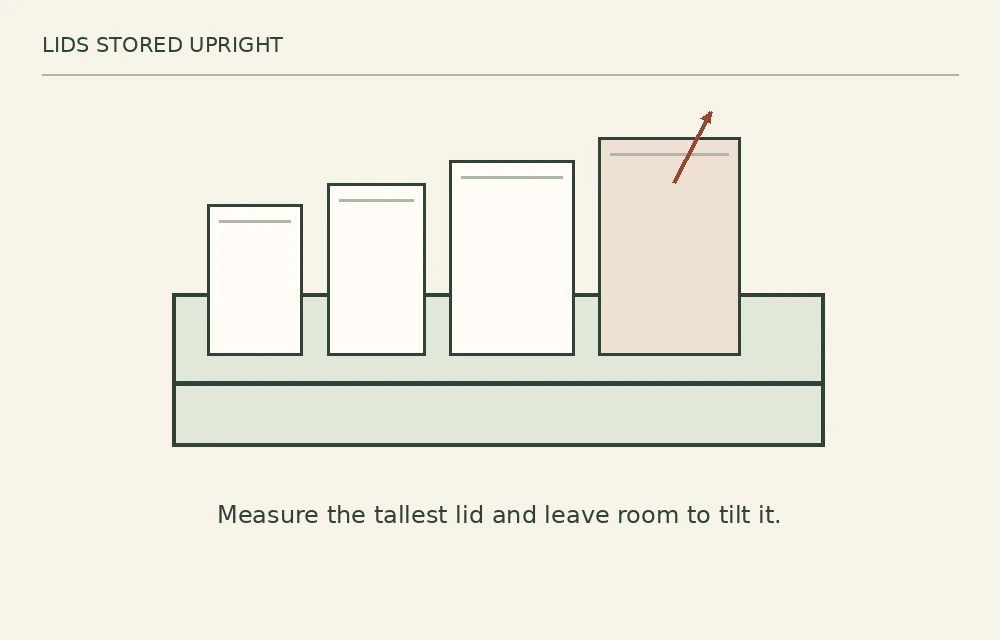
Measure the tallest lid in its proposed orientation, then add room to pinch and tilt it out. Check that the door closes and the drawer clears the cabinet rail. Buy a divider only if it keeps the trial layout stable and you can clean between its slots.
Allow for real openings
Bring the largest round lid and the thickest locking lid to your cardboard mock-up. A rack with even slots can look efficient yet force those two sizes to sit sideways. Use a shallow tray for flexible lids that slump and a rack for rigid lids that stand upright. A good layout keeps the matching bases close enough that you can put a container away without opening a second cabinet.