 Shelf & Square
Shelf risers vs. stacking bins for kitchen cabinets
Decide where vertical storage adds useful space for dishes or packaged pantry goods.
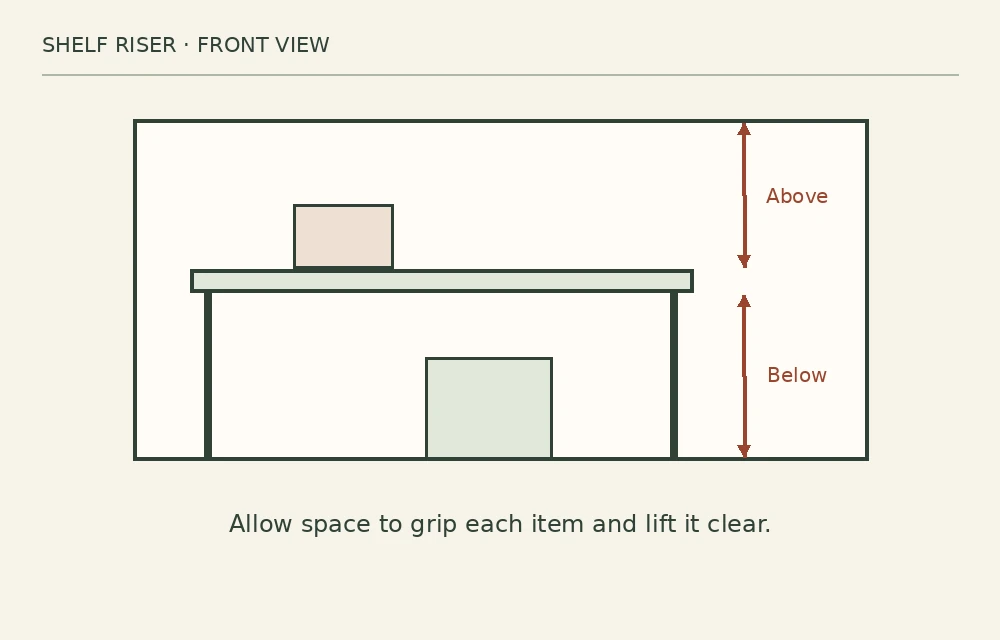
Start with the clear height on each side of the shelf
Measure at the back and at the opening. A shelf can have a support rail that reduces the usable height in one area. Add the height of the items below the riser to the thickness of the platform and the height of the items you want on top. Leave enough clearance to get a grip.
Compare two storage formats
A riser creates an open second level for mugs, tins or frequently used dishes. A stackable bin works well for light packets if the front opening remains reachable. If the only way to reach an item is to unstack a second bin, give everyday items the top position and reserve the lower bin for refills.
Check a real example
IKEA lists its larger white VARIERA shelf insert at 12 5/8 inches wide, 11 inches deep and 6 1/4 inches high. Measure the available space between the legs and check published load guidance before using any riser for heavy dishes. The listed outer height also includes the shelf surface, so the usable gap beneath is smaller.
Use two stacks before buying a second riser
Load the lower level first. Then place two light items on the top and see whether each can leave the shelf without brushing the door or knocking its neighbor. For cabinets with center supports, compare the opening width to the full riser feet. A wide insert can easily fit inside yet be impossible to slide through the opening in one piece.