 Shelf & Square
Pantry bins vs. airtight containers
Choose the format that suits packets, loose ingredients and shallow shelves.
Pick bins for packages you can already close
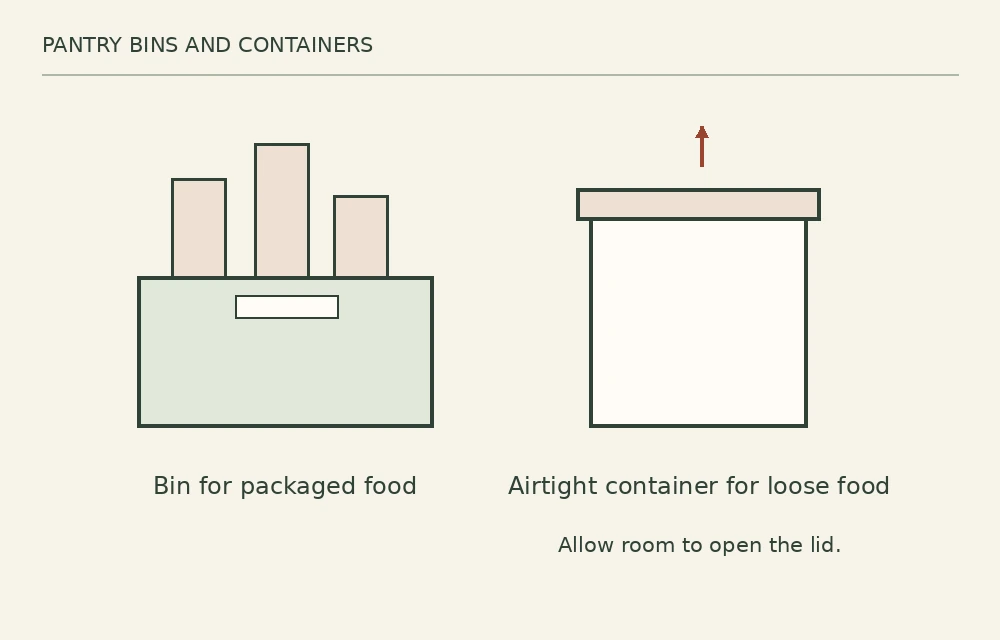
A handled bin gathers opened and unopened packs into a single shelf zone. A low front helps you see small sachets. A solid base catches loose crumbs but also hides them if the bin is opaque. A standard plastic bin may organize packaged food while a separate food-safe container suits loose ingredients.
Pick sealed containers for a specific ingredient
Compare interior capacity, opening size and lid clearance. A flour scoop needs a wider opening than a pour spout, and a tall flip-up lid requires space above the container. Retain package information such as the date and allergen details where needed. Follow any storage instructions for the food itself.
Use a buy-or-keep rule
Keep current containers that fit, clean easily and let you pull the right item out without moving two others. Buy one sample if an old container wastes major shelf space or tips while you reach past it. Fill and use the sample before purchasing a set. A mixed shelf can work well when all formats have a clear job.
Compare the top edge to the usable depth
A product page may list the dimensions including the handles, but some sellers list only the bin body. Use the manufacturer diagram or measure in person before committing to several containers. For sticky or dusty ingredients, choose a design you can empty and wash between refills. Consider cost per usable container rather than the number of pieces in a set, because decorative scoops and accessories can inflate the piece count.