 Shelf & Square
How to organize a shallow pantry shelf
Turn a shelf with almost no usable depth into a set of easy-to-pull zones.
Measure the shelf with the door closed
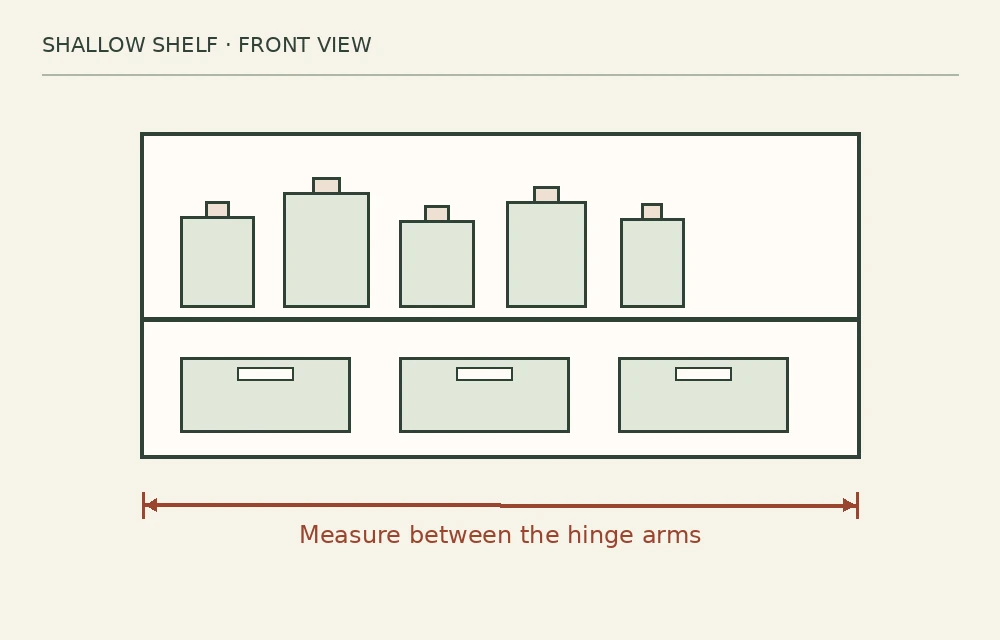
Measure the usable depth behind the closed door by checking the hinge arms and door frame. Clear depth often varies across the shelf. Measure the height to the next shelf and leave enough room to lift a container or reach a handle. Sketch these dimensions before deciding on bins.
Place food by picking motion
Stand packets or pouches in narrow open bins so you can flip through the contents. Keep short jars in front of taller jars if both rows remain visible. If the shelf only fits one row, put daily items in the easiest zone and move refills to a separate cabinet. Give frequently used items a clear path out.
Buy once your layout works
Mock up bins with open cartons for one week. Notice whether a high front blocks small packets and whether a handle uses the last inch of depth. For decanted food, use containers the maker labels for food contact and retain ingredient and date information from the original packaging. A set of matching containers can wait until you know which sizes you actually consume.
Choose one row before adding another
A second row makes sense if you can pull it out as a single unit. Try a temporary paper divider before buying extra bins. Leave a finger-width gap at the front if a flat-sided bin has no handle. Measure the filled bin at its widest point. Bulging packets and folded lids can claim space that looked clear when the bin was empty.