 Shelf & Square
Small fridge organization for easy-to-see leftovers
Give short shelves a rotation zone and choose bins that leave room for a hand.
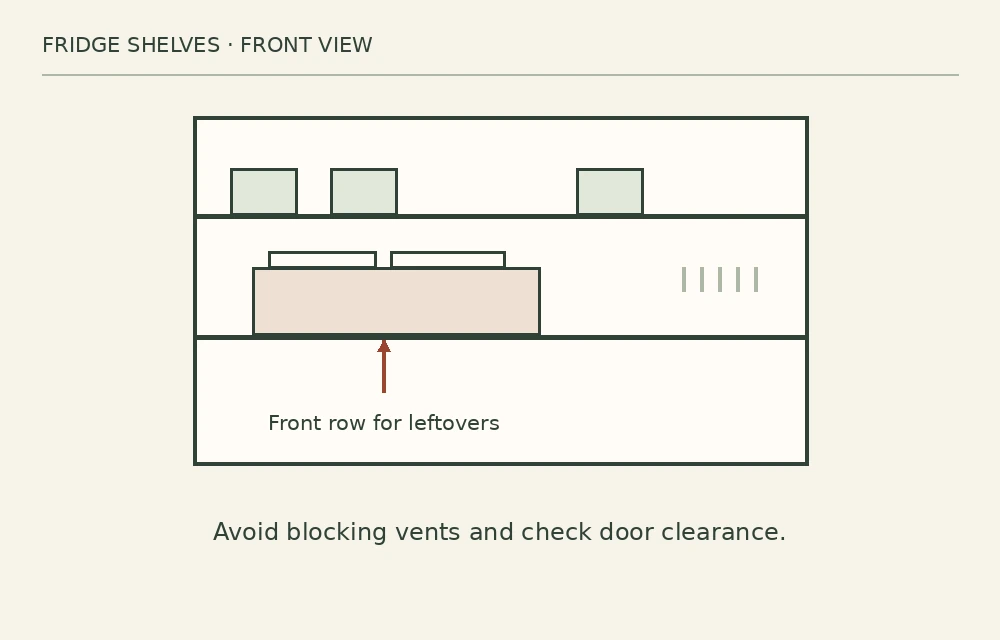
Put leftovers where you will see them
Give ready-to-eat leftovers space up front where you can see the label without moving a second container. Use dates to decide what to eat first and follow current food-safety storage guidance. Store raw meat separately from ready-to-eat food and consult FoodSafety.gov for refrigerator temperature and storage times.
Shop the shelf with the door closed
Measure shelf depth and the clear height above it. Leave room at the front to grasp a handle, account for door bins and avoid blocking vents. A clear bin helps when you actually need to move small containers together. A plain shallow tray may be sufficient for one row of leftovers.
Let daily use decide the layout
Put items back in the same zone for several days. If groceries are difficult to put away, move one bin rather than adding another. If a bin never comes out, use the shelf without it. Give the saved space to a visible row of ready-to-eat foods or to whatever your household replenishes most often.
Decide whether a bin earns its space
Try the layout for three grocery trips. If several people use the fridge, keep the front row labeled in plain language. Choose a shorter bin when the door shelf projects into the front space or a deeper bin only when a hand can comfortably reach its grip. Keep any loose produce away from locations where the manufacturer warns it can freeze or block airflow.